This week we are going to be talking about staging. One thing that is really cool about theater is that it is meant to be visual! Plays are not simply to read, they are meant to be performed. Shakespeare plays have been performed in countless different mediums and styles. They have been put into different time periods. For example, I once attended a performance of The Taming of the Shrew that was set in the 80's. The typical format of one stage with the audience in front and full Shakespearean garb is not always what is chosen. In fact, even the way the audience is seated can vary from play to play. Here are the main types of staging that are used:
Proscenium: This is the most typical type of staging. It is also what you have probably seen before. It looks like this:
| theatredesigner.wordpress.com |
Thrust: This type of staging brings the playing space forward into the audience. This allows the audience to surround the action, which can create a more interesting audience/player dynamic. It looks like this:
In the Round: In the round allows for a playing space in the middle with audience members all around. This allows for a more involved audience experience and can allow for interaction between the audience and the players. This can take many forms, but it may look something like either of these:
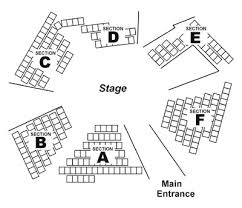
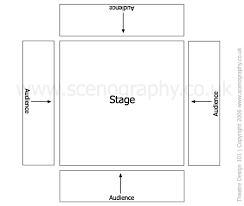
| https://encrypted-tbn2.gstatic.com/images?q=tbn:ANd9GcSz4MXzJHBMjvRpnDkD5DboIHfD6g4xCOGkVm16jvTTEBlU3No |
Alley: Alley is a more extreme form of thrust. It takes the stage and puts the audience on either side. This can be a complicated form of staging to allow everyone to see, but it has its uses. It looks like this:
 |
| www.masterarts.org |
theatreintheround.org theatredesigner.wordpress.com
So, what I would like you to do is to take one style of staging and a time period to set one of Shakespeare's plays in. Give a brief description of what the staging would look like and how you would reflect your time period in your version of the play and why you made this decision. This should be about a paragraph long. Please comment on another person's post as well.
Good luck and have fun,
Ms. Kindel
